
Fine Art Wedding Prints: Why Physical Photographs Still Matter
The photographer notices the way her grandmother’s hand rests on her shoulder — not the gesture itself, but the slight curl of the fingers, the rings catching light from across the room. That detail exists for perhaps three seconds before the embrace ends and the evening moves on. Whether it survives the next thirty years depends entirely on decisions made long before that moment happened, and long after the shutter opens and closes. A photograph printed and framed becomes something different from a photograph filed on a hard drive — it becomes an heirloom, which is to say, it becomes permanent.
Fine art wedding prints are high-quality photographic prints made with archival-grade materials — papers, inks, and mounting processes designed to last for generations without fading or degrading. A fine art print differs from a standard print in both material quality and the intentionality behind how the image was made: the photograph is crafted, not simply produced. For couples in St. Louis, ordering fine art prints from a professional photographer rather than a consumer lab means receiving a finished product with professional color calibration, longevity guarantees, and a physicality that digital files cannot replicate.
Most couples planning a wedding think about the ceremony, the reception, the flowers, the food — and somewhere in that list, the photography. But what happens after the photographer leaves? The images arrive as a digital gallery, and then what? Are those files somewhere safe five years from now, or are they on a phone that was replaced twice? Is the version of your wedding day that will matter most to your children something they can hold in their hands, or something they would need a password to find? The anxiety many couples feel is not about the wedding itself — it is about whether anything will remain of it that feels real and lasting.
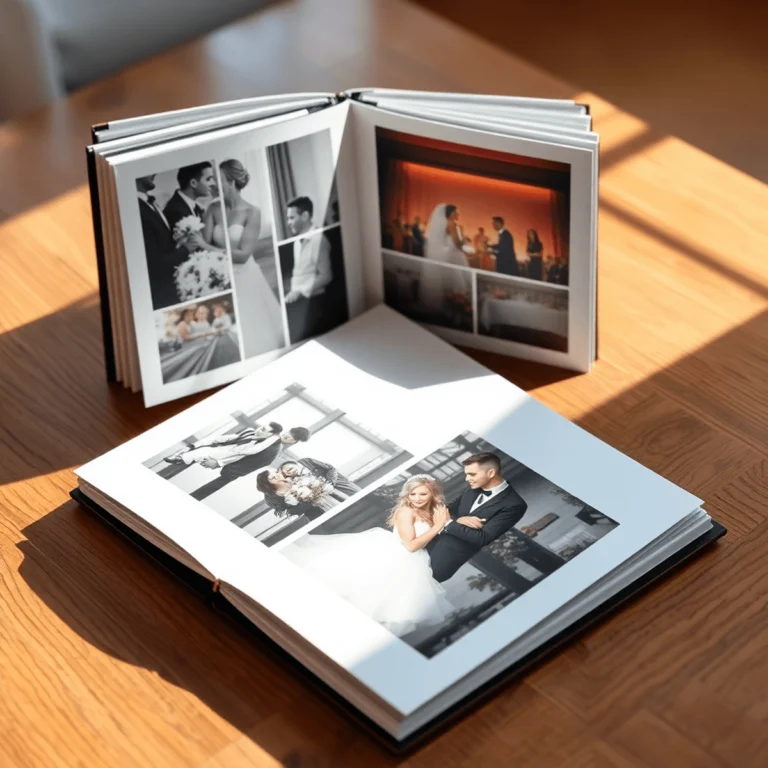
Thirty years from now, a wedding album sitting on a coffee table will have been touched hundreds of times. It will have been opened for grandchildren, carried to family gatherings, set in laps during conversations that happened because it was there to start them. The photograph shows a young woman in a white dress; what the moment felt like was closer to controlled chaos and overwhelming love, which are not the same thing at all, and yet the image distills both into something that can be passed between generations without explanation. An event happens, and then it becomes a memory held by the people who were there — but the heirloom is what carries the event forward to people who were not. That progression — from event to memory to heirloom — is not sentimental language. It is a description of how physical objects outlast the people who made them. A photograph printed on archival paper and mounted behind museum glass does not depend on anyone’s hard drive. It does not require a subscription. It simply endures, which is the most honest thing any photograph can do.
As a Certified Professional Photographer with 25 years of work in the St. Louis metro area, Matthew D. Kauffmann has watched the conversation around wedding photography shift dramatically — from film prints to digital files, and now back toward print, as couples begin to understand what digital-only delivery actually means over time. The CPP credential requires demonstrated knowledge across the full image lifecycle: not just how a photograph is made, but how it is processed, printed, and preserved. That end-to-end understanding is why the choice of print lab, paper stock, and mounting method is treated here with the same seriousness as the choice of lens or light. Fine art prints begin with files that are prepared specifically for large-format output — color profiles matched to the lab, sharpening adjusted for the paper’s surface texture, tonal values reviewed on a calibrated monitor rather than a laptop screen in a coffee shop. The papers themselves matter enormously: a warm cotton rag paper renders skin differently than a bright baryta, and a print intended to hang on a wall requires different decisions than one destined for an album page. Framing and mounting choices affect not just appearance but longevity — UV-protective glass, acid-free matting, and archival backing boards are the difference between a print that lasts a decade and one that lasts a century. None of this happens automatically. It requires a photographer who thinks about the final object from the beginning of the session, not as an afterthought. The light that shapes a face in a reception hall, the exposure that holds shadow detail in a dark ceremony — those are decisions made in service of the print, not just the screen.
MDKauffmann Photography works with couples throughout the St. Louis metro area who are ready to think about their wedding photographs as objects, not just files. If you are the kind of person who values things built to last — who would rather own one extraordinary thing than a hundred disposable ones — there is a conversation worth having before your wedding date arrives. Reaching out is simply a matter of visiting the contact page and starting that conversation. Matthew brings 25 years of St. Louis experience and a genuine investment in what you take home, not just what happens on the day. The work speaks for itself, which is the only kind of confidence worth having.
Frequently Asked Questions
What is the difference between a fine art print and a regular photo print?
A fine art print is made with archival-grade papers, pigment-based inks, and professional color calibration designed to preserve image quality for generations, while a standard print uses lower-cost materials that can fade or degrade within years. The distinction also goes beyond materials — fine art prints involve deliberate preparation of the digital file, including color profiling, output sharpening, and tonal review on a calibrated monitor. The result is a finished object with both visual quality and physical longevity that consumer lab prints simply cannot match.
How long do fine art wedding prints last before they start to fade?
Fine art prints made with archival pigment inks and acid-free materials are rated to last 100 years or more under normal display conditions without significant fading. The combination of UV-protective glass, acid-free matting, and archival backing boards extends that lifespan further by protecting against light, humidity, and off-gassing. By contrast, standard consumer prints can begin showing color shifts in as few as ten to fifteen years, depending on display and storage conditions.
Is it worth ordering prints from my wedding photographer instead of just printing them myself?
Yes — ordering prints through your photographer rather than a consumer lab ensures the files are properly prepared for the specific paper and printer being used, which directly affects color accuracy, sharpness, and longevity. A professional photographer calibrates color profiles to the print lab, adjusts sharpening for the paper's surface texture, and reviews tonal values on equipment designed for that purpose. The difference between a professionally prepared fine art print and an upload to a consumer printing website is visible, and it compounds over decades.
Still thinking? That's what the consultation is for.
Every MDKauffmann commission starts with a conversation — not a sales pitch. We talk about your day, your priorities, and what "forever" looks like for your family. If we're the right fit, you'll know. If we're not, I'll tell you honestly.
Start the Conversation →Dates book fast — especially May through October.