
Barns, Ballrooms, Historic Halls & Outdoors: St. Louis Venues Compared
Not ready to talk yet?
Map out your date, budget, and day-of timeline
Built by the photographer who'll actually be there — no pressure, no sales call.
Explore the Planning Tools →At a barn wedding outside Belleville last fall, the reception tables sat at an angle nobody planned — turned just enough that for four minutes past six, the low autumn light slid straight down the center aisle of hay bales and gold linens. Nobody moved a chair to catch it. Nobody needed to. It simply happened, the way small details happen at weddings that nobody notices until years later, when that particular photograph turns out to be the one everyone keeps asking about. Sorry — should’ve mentioned earlier that weddings are full of these tiny unplanned moments, the kind no seating chart can account for. That is what makes a photograph Timeless instead of dated: it has nothing to do with trends and everything to do with light nobody arranged.
St. Louis-area wedding venues generally fall into four broad categories: rustic barns, formal ballrooms, historic buildings, and outdoor settings such as gardens, vineyards, or riverfront parks. Barns offer warm, textured backdrops with flexible layouts and character that photographs well in low light. Ballrooms provide polished symmetry, reliable climate control, and consistent year-round availability. Historic venues add architectural detail and a built-in sense of permanence, though they often come with lighting or access restrictions. Outdoor settings offer the most open, natural scenery but depend heavily on season, weather, and time of day. Each type suits a different kind of celebration, and none is inherently better than another.
Consider a couple choosing between a barn in Monroe County and a downtown ballroom. The barn feels honest — worn wood beams, open doors, a working farm quieted down for one evening. The ballroom feels certain — chandeliers, marble floors, a room built for exactly this kind of gathering. Neither choice is wrong, but the worry underneath it is the same: will the place they pick still feel like them when they look back at it years from now? Will the venue outlast the trend that made them love it this year? Some couples try to solve this by touring five venues in a single Saturday, hoping one will simply feel right. Others solve it by picking whatever venue happens to have an opening on the date already circled on the calendar. Half of the reasons behind a venue choice get forgotten by the time the reception starts. What does a couple actually owe the future version of themselves, the one who will look at these photographs long after the flowers are gone and the guest list has scattered across four different area codes?
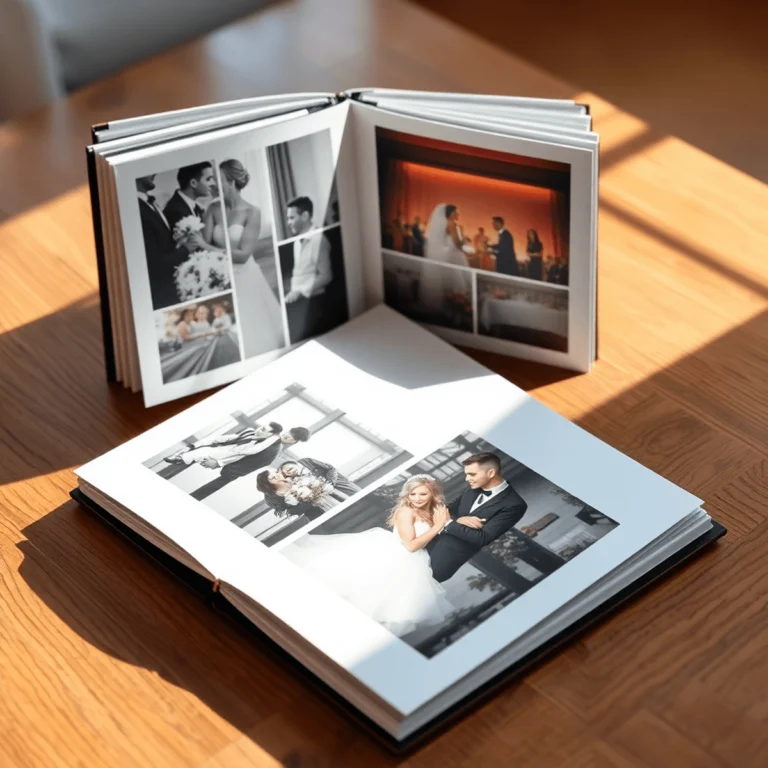
Thirty years from now, no one will remember which linens matched which centerpiece, or whether the ballroom carpet leaned more sage than olive. Whether the venue was a barn, a ballroom, a historic hall, or an open field, the pattern holds the same: what survives is the wall the light hit, the doorway someone leaned against while laughing at something no one else heard, the architecture that gave the day its shape. In the moment, that hallway was just a hallway — a place to escape the noise for thirty seconds between toasts. In the photograph, it becomes a frame: cool stone, warm skin, one hand still holding a champagne glass. The moment felt loud, crowded, a little rushed. The photograph feels quiet, deliberate, still. That gap between the two is not a flaw. It is the whole point of choosing a venue with real character instead of a blank room built for a hundred other weddings that same year. An event happens once. It softens almost immediately into a memory, reordered and simplified the way memory always works. But only a few of those memories get to become heirlooms — objects a grandchild will hold and ask about, the barn’s rough beam or the ballroom’s plaster ceiling doing half the storytelling before anyone opens their mouth. That is what venue character is actually for. It gives the years something to lean against, long after the reception playlist is forgotten.
As a Certified Professional Photographer who has worked weddings across the St. Louis and Metro East region for 25 years, the honest answer is that venue type changes the lighting plan more than almost anything else in wedding photography — but it should never change the standard of the final image. Is a barn harder to light than a ballroom? In some ways, yes. A barn like the Schwarz Barn near Belleville gives rough wood, iron hardware, and deep pockets of shadow that make excellent contrast partners for off-camera flash; one strobe placed off to the side, gelled slightly warm, turns a dim hay-strewn corner into something that reads rich and dimensional instead of flat and yellow. Ballrooms present the opposite problem: plenty of ambient light, but light that is flat, mixed in color temperature, and coming from six directions at once, which is exactly why a photographer has to build shape into the scene deliberately rather than borrow it from the chandeliers. Do historic venues create their own limitations? Often, yes — many restrict where a light stand can go, so a wedding photographer working Belleville IL or greater St. Louis needs to know how to bounce and shape light off original plaster, brick, or stained glass without damaging either the architecture or the image. Outdoor venues swing the widest of all, full sun at 2pm and open shade at 6pm within the same afternoon. None of that changes what the photograph should look like when it is finished, and that consistency across every venue type is, in the end, closer to what a couple is really hiring a photographer for than the venue itself. Twenty-five years of shooting every one of these room types has settled that argument for good: a well-placed flash, used with restraint, reads like better ambient light, never like artificial light. It simply holds up, year after year, regardless of the room it was born in.
Choosing a venue often comes before choosing a photographer, and that order makes sense — the barn, the ballroom, the garden, the historic hall: these are the settings the rest of the evening will be built around. Once that choice is made, the next question is simpler. Who understands how to make that particular room, field, or century-old doorway look like itself at its best, in whatever light the day happens to throw at it? Matthew D. Kauffmann has spent 25 years learning the particular rooms and fields of the St. Louis and Metro East area, from barns outside Belleville to ballrooms downtown to gardens that only bloom for three weeks each spring. Reaching out starts a conversation about which venue fits the couple, not the other way around, and about how that venue’s light will hold up on the day and for every day after it. The rest tends to take care of itself.
Frequently Asked Questions
What is the difference between a barn wedding and a ballroom wedding in St. Louis?
A barn wedding offers rustic, textured backdrops with flexible layouts and warm low light, while a ballroom offers polished symmetry, reliable climate control, and consistent year-round availability. The right choice depends more on the mood a couple wants than on which option is objectively better.
Are historic wedding venues harder to photograph than other venues?
Yes, historic venues often come with lighting and light-stand restrictions that require a photographer to bounce and shape light off original plaster, brick, or stained glass. Despite those limits, they offer architectural detail and a sense of permanence that many other venue types can't match.
Does the type of wedding venue affect the quality of the photos?
The venue changes the lighting plan and approach, but it should never change the final quality of the images a couple receives. An experienced photographer adjusts techniques for barns, ballrooms, historic buildings, or outdoor settings so the standard stays consistent regardless of location.
What should I consider when choosing an outdoor wedding venue near St. Louis?
Outdoor venues like gardens, vineyards, or riverfront parks depend heavily on season, weather, and time of day, so light conditions can shift dramatically within a single afternoon. Couples should plan their ceremony and reception timing with those natural light changes in mind.
Still thinking? That's what the consultation is for.
Every MDKauffmann commission starts with a conversation — not a sales pitch. We talk about your day, your priorities, and what "forever" looks like for your family. If we're the right fit, you'll know. If we're not, I'll tell you honestly.
Start the Conversation →Dates book fast — especially May through October.