
Mixing Black-and-White with Color: Creating Visual Impact in Your Album
Not ready to talk yet?
Map out your date, budget, and day-of timeline
Built by the photographer who'll actually be there — no pressure, no sales call.
Explore the Planning Tools →Mixing Black-and-White with Color in Your Wedding Album
You’ve booked your photographer. You’ve thought about the flowers, the dress, the first dance. At some point — maybe not yet, but soon — you’ll start thinking about the album.
Not just having one. What it actually feels like to sit down with it ten years from now.
That’s where the conversation about black-and-white versus color becomes worth having. Not as a technical debate, but as a question about what you want your album to do.
It’s Not a Style Choice. It’s a Pacing Choice.
Color does what color does — it puts you back in the room. The exact shade of your flowers. The way the light hit the reception tent at golden hour. The bridesmaid dress that photographed better than anyone expected.
Black-and-white does something different. It slows things down. Strips the noise. When your grandmother is crying during the ceremony and I convert that frame to monochrome, I’m not removing information — I’m removing everything that isn’t her face.
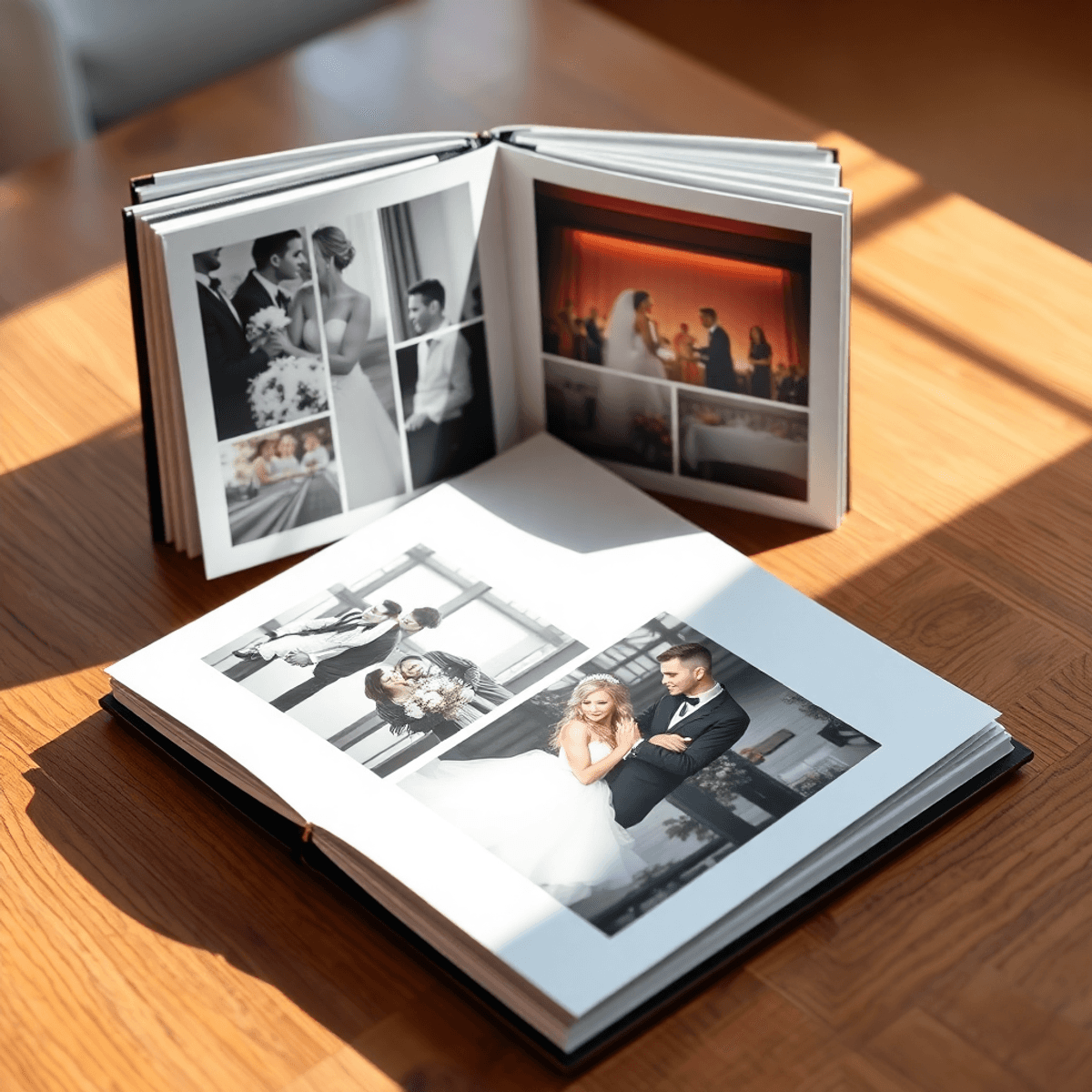
The reason mixing the two works so well in an album isn’t artistic theory. It’s rhythm. Color pages move fast. Black-and-white pages make you stop. An album that’s all color can feel relentless. One that’s all black-and-white can feel heavy. Together, they breathe.
How I Think About Which Photos Get Which Treatment
There’s no formula, but there are patterns.
Black-and-white tends to serve:
- Moments where emotion is the whole point — vows, first looks, the quiet five minutes before you walk down the aisle
- Portraits where the light was gorgeous but the background was chaos
- Frames where two people are just looking at each other and nothing else needs to exist
- Anything where competing colors would pull your eye away from what matters
Color tends to serve:
- Details you spent months choosing — florals, cake, tablescapes, your shoes
- The full energy of a reception — dancing, toasts, the moment your people are all in one place
- Outdoor ceremony frames where the setting is half the story
- Candids where the joy is written all over everyone’s face and you want every bit of it
The through-line: color preserves context, black-and-white preserves feeling. Most albums need both.
What This Looks Like in Practice
When I’m building your album, I’m not going photo by photo asking “color or black-and-white?” I’m thinking about the whole arc — how the album opens, where it breathes, where it builds, how it lands.
A sequence might look like this: three color frames from the getting-ready chaos, one quiet black-and-white of you looking out the window before your father knocks, back to color for the processional, then a black-and-white double-page spread of the ceremony itself, then color exploding back in for cocktail hour.
That’s not accidental. That’s the album telling the story of the day the way the day actually felt — not just what it looked like.
A Note on Consistency
One thing that surprises couples sometimes: black-and-white can actually save photos taken under difficult lighting. Indoor receptions with mixed artificial light, church ceremonies with fluorescent overheads, twilight portraits where the color balance went sideways — converting those frames to monochrome isn’t a consolation prize. It’s often the right call, and it makes the album more cohesive than insisting every frame stay in color.
The goal is never “fix it in post.” But the goal is also an album that holds together as a whole, and sometimes monochrome is what makes a frame belong.
Your Album Is a Collaboration
You don’t have to have opinions about any of this if you don’t want to. That’s what I’m here for.
But if you do have opinions — if there are frames you already know you want in black-and-white, or moments you absolutely want in color — tell me. The album design process is a conversation, not a delivery. The more I know about what matters to you, the better I can build something that actually feels like your day instead of a wedding day.
That’s the difference between an album you look at once a year and one you keep on the coffee table.
FAQs
Can I request specific photos be in black-and-white or color? Yes, absolutely. During the album design process we’ll go through selects together and your preferences are always part of the conversation.
Do you shoot in black-and-white or convert in editing? I shoot in color and make conversion decisions during editing, which gives me the most flexibility and the best quality in both treatments.
Will my album have a mix of both, or can it be all one style? It can be whatever serves your story best. Most albums benefit from a mix, but if you have a strong preference for one approach, we’ll build around that.
How do you decide which moments get black-and-white treatment? Primarily by what the frame is trying to do — emotional weight tends toward monochrome, environmental context tends toward color. But it’s always in service of the album as a whole, not a rule applied photo by photo.
Does black-and-white cost extra? No. It’s part of how I edit and design. You’re not paying for a filter — you’re getting a photographer who thinks about this stuff.
Still thinking? That's what the consultation is for.
Every MDKauffmann commission starts with a conversation — not a sales pitch. We talk about your day, your priorities, and what "forever" looks like for your family. If we're the right fit, you'll know. If we're not, I'll tell you honestly.
Start the Conversation →Dates book fast — especially May through October.