Wall Art Sizing: The Math for Perfect Proportions
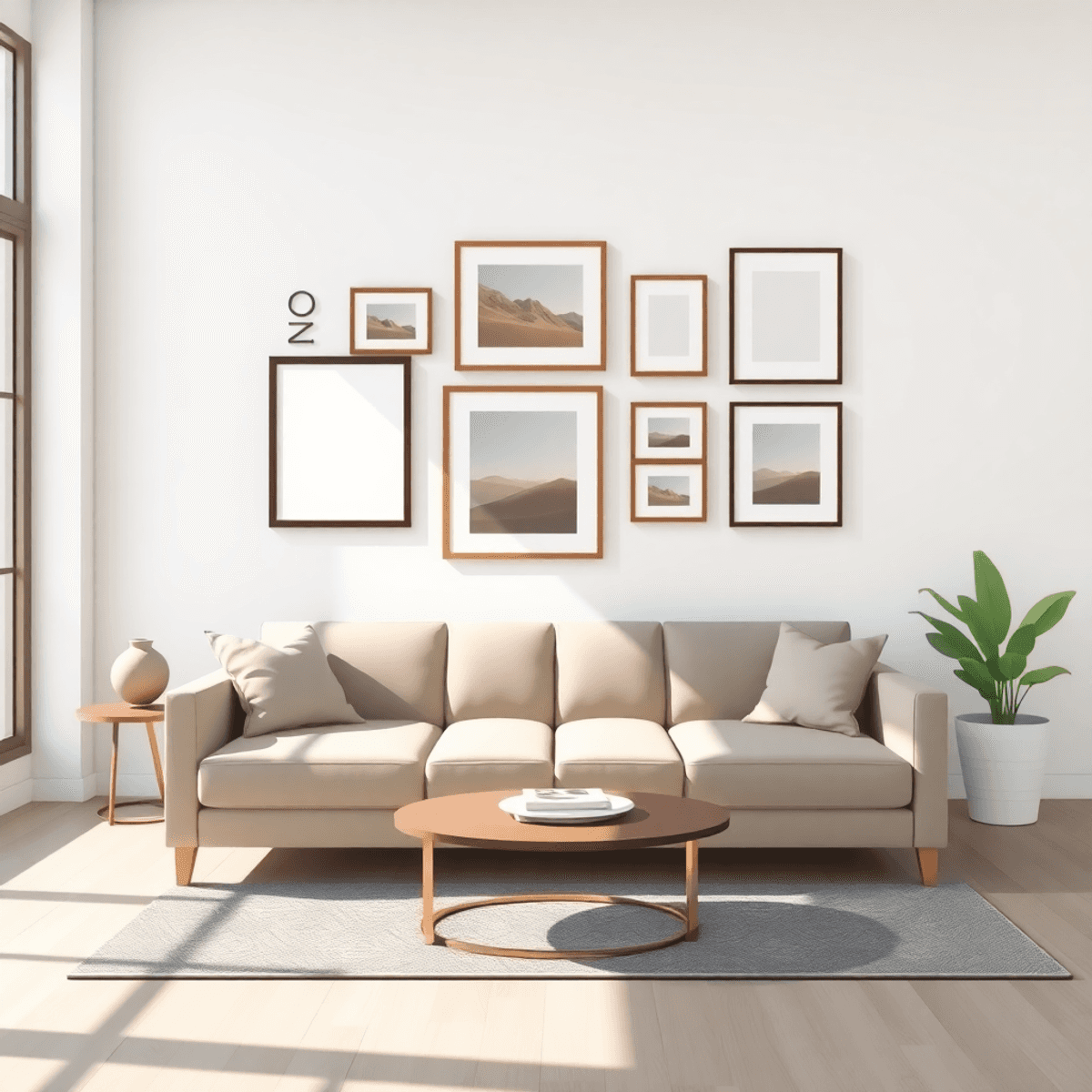
A wedding portrait gallery anchoring a living room wall with quiet authority — sized with intention, hung with precision, and impossible to walk past without stopping to look.
Proper wall art sizing is essential to create displays that feel balanced and visually pleasing. When artwork is too small or too large for a given space, it can disrupt the room’s harmony, making the decor seem either sparse or overwhelming. Achieving perfect proportions ensures your art complements the environment rather than competing with it.
Understanding the math behind wall art sizing helps you arrange pieces that fit naturally within your space. Mathematical principles and design rules act as reliable guides, allowing you to calculate ideal artwork dimensions relative to walls, furniture, and other architectural elements. These guidelines prevent guesswork and make the process of selecting and placing art more intentional.
At MDKauffmann Photography, our expertise extends beyond capturing moments; we specialize in producing heirloom-quality wall art as part of our wedding photography services. This experience provides unique insight into how the right art display math enhances not only visual appeal but also emotional connection through timeless imagery designed to fit perfectly on your walls. Our fine art photography experience allows us to create stunning wall displays that resonate with personal stories and memories.
Moreover, we understand the importance of mastering the art of wedding posing to achieve picture-perfect moments. Each photo we take is a piece of art that tells a story, especially when we capture exclusive moments through high-end wedding photography.
Our approach also involves professional editing techniques that enhance the storytelling aspect of our sequential wedding photo albums. This method allows us to produce sequential wedding photo albums that not only serve as a visual record of the day but also as cherished heirlooms.
Understanding Wall Space and Artwork Size Relationship
Achieving visual balance with wall art starts by understanding the relationship between artwork size relative to wall space. This connection guides how much of your empty wall should be covered and how art relates to adjacent furniture pieces.
Wall Coverage Percentage for Empty Walls
A practical rule is for artwork to cover approximately 60-75% of the available empty wall area. This range ensures the piece:
- Commands attention without overwhelming the space
- Maintains an open, harmonious atmosphere
- Prevents the wall from feeling too cluttered or too bare
For example, if you have a blank wall measuring 100 inches wide by 80 inches high, aim for artwork that spans roughly 60 to 75 inches in width and proportionate height. This approach balances presence with breathing room.
Artwork Size Above Furniture: Proportion to Width
When hanging art above furniture—such as sofas, sideboards, or beds—the artwork should measure about two-thirds (2/3) to three-quarters (3/4) of the furniture's width. This sizing visually anchors the art to the piece below it and creates a cohesive vignette.
- A sofa 90 inches wide would pair well with artwork between 60 and 68 inches wide.
- For a dresser measuring 48 inches across, select art about 32 to 36 inches wide.
This proportionality avoids awkward gaps or oversized pieces that can disrupt scale.
Illustrative Examples Across Room Settings
- Living Room: A large sectional sofa (96" wide) calls for artwork sized ~64" to 72" wide centered above it. The piece fills enough space to feel integrated but leaves margin on either side.
- Dining Area: Above a buffet table measuring 60" wide, choose art around 40" to 45" wide. Smaller pieces risk looking disconnected; too large overwhelms the dining setting.
- Bedroom: Over a queen bed (~60" wide), hang art or a set of panels spanning about 40" to 45". This creates a focal point that complements rather than competes with bedroom furnishings.
- Entryway or Hall: When placing single artworks on narrow walls without furniture, using the 60-75% coverage rule ensures they fill the space effectively without crowding.
Visualizing these relationships helps you avoid common mistakes like undersized prints lost against large walls or giant canvases dwarfing furniture below. Adhering to these proportions sets a solid foundation for any balanced and aesthetically pleasing display.
Gallery Wall Layouts: Calculating Dimensions and Spacing
Creating a successful gallery wall layout requires attention to size, spacing, and placement. These factors work together to produce a visually cohesive display that enhances the room's aesthetics.
Width and Relationship to Furniture
- Gallery walls typically span 2/3 to 3/4 the width of the furniture below them. This proportional relationship ensures the artwork feels anchored yet not overpowering.
- For example, if a sofa is 84 inches wide, aim for a gallery wall between 56 inches (2/3) and 63 inches (3/4) wide.
- Staying within this range helps maintain harmony between the art and furniture, avoiding awkward gaps or cramped spaces.
Frame Spacing
- Standard spacing between frames ranges from 2 to 3 inches. This gap balances individual piece separation with overall group coherence.
- In smaller rooms or tighter layouts, reduce spacing to around 1.5 inches to maximize visual impact without overcrowding.
- Wider spacing can give each piece more breathing room in larger spaces but risks fragmenting the gallery’s unity if overdone.
Display Height
- The optimal center height for hanging art is approximately 57 inches from the floor, aligning with average eye level for comfortable viewing.
- For multi-row arrangements, calculate the vertical center point of the entire gallery and position it at this height.
- Adjust slightly for taller ceilings or lower seating but keep close to this guideline for natural viewing flow.
Popular Layout Styles
Gallery walls come in various configurations. Choose based on space, artwork sizes, and personal style:
- Grids: Uniform rows and columns create symmetry and order; ideal for similarly sized pieces.
- Organic Clusters: Irregular groupings mix sizes and shapes for a casual, dynamic feel.
- Rows: Single horizontal lines work well above narrow furniture like console tables.
- Staircases: Step-shaped layouts follow stair risers for visual rhythm along stairways.
- Mixed Arrangements: Combine different styles or sizes while maintaining consistent spacing and alignment points.
Calculating Total Dimensions Using Layout Formulas
You can use simple formulas to determine total gallery wall dimensions when planning:
Width = (columns × piece width) + ((columns − 1) × gap) Height = (rows × piece height) + ((rows − 1) × gap)
Columns = number of pieces horizontally
Rows = number of pieces vertically
Piece width/height = individual artwork dimensions
Gap = consistent frame spacing between artworks
Example: A grid with 3 columns and 2 rows of artworks each measuring 16” wide by 20” high with a 2-inch gap will have:
- Width = (3 × 16") + (2 × 2") = 48" + 4" = 52 inches
- Height = (2 × 20") + (1 × 2") = 40" + 2" = 42 inches
Knowing these totals helps you preview how much wall space your gallery will occupy before hanging. It also assists in choosing compatible frame sizes or adjusting gaps to fit available space perfectly.
These practical guidelines on sizing, spacing, and layout styles empower you to design gallery walls that complement your interiors beautifully while respecting key mathematical principles behind balanced displays. If you're considering incorporating wedding photos into your gallery wall, remember that collaborating effectively
Proportional Scaling Principles for Cohesive Displays
Proportional scaling plays a crucial role in achieving artwork size harmony within your space. It ensures that multiple pieces work together visually, creating a balanced and cohesive display without any single piece overwhelming the others.
The Companion Piece Principle
The companion piece principle guides you to select artworks that are proportionally related in size to a main focal piece. For example, if your centerpiece is 48 inches wide, companion artworks might be sized around 30 inches or 20 inches wide. This proportional relationship helps maintain visual rhythm and avoids awkward size discrepancies.
Example: A 48” wide canvas paired with two 30” wide panels on either side forms a harmonious trio.
Choosing companions that are roughly 60% or 40% of the main artwork’s width respects spatial relationships and draws the eye naturally across the arrangement.
Benefits of Proportional Scaling
- Visual Harmony: Creates balance across groupings by avoiding jarring jumps in scale.
- Flexible Groupings: Works well whether you’re displaying seasonal rotations or permanent collections.
- Consistent Flow: Keeps your wall art visually connected, even when mixing different styles or subjects.
When artworks follow these proportional guidelines, your display feels intentionally curated rather than random or cluttered.
Rescaling and Downsizing for Adaptability
Adapting your collection for new spaces or changing décor becomes simpler with proportional scaling. Downsizing allows you to:
- Fit artwork comfortably into smaller rooms without losing impact.
- Maintain relative size relationships when moving pieces between rooms.
- Refresh a gallery wall by substituting companion pieces in different sizes while preserving overall proportions.
Rescaling isn’t about simply shrinking art; it’s about preserving the mathematical relationships that keep displays unified. This approach supports dynamic decorating, whether you’re shifting from a large living room wall to a cozy hallway or introducing seasonal variations in size and color tone.
Proportional scaling bridges the gap between individual artworks and their environment, ensuring your display looks thoughtfully designed instead of haphazard. This principle is an essential part of Wall Art Sizing: The Math for Perfect Proportions, helping you craft displays that feel both personal and polished.
Popular Wall Art Sizes and Formats Explained
Choosing the right size and format for your wall art is essential to complement your space without overwhelming it. Recognizing common canvas sizes, multi-panel arrangements, and framed artwork dimensions helps you select pieces that fit your room’s scale and style.
Common Canvas Sizes
Large canvases make bold statements in living rooms, dining areas, or entryways. Popular dimensions include:
- 92” x 42”: Ideal for wide walls or above large furniture like sofas or beds. This expansive size commands attention and anchors a room.
- 84” x 54”: Offers a substantial vertical presence, perfect for spaces needing height emphasis such as stair landings or tall walls.
- 48” x 32”: A versatile mid-sized panel that fits well in smaller rooms or as part of a multi-panel arrangement.
These sizes accommodate varied wall dimensions while maintaining proportional balance with surrounding furniture and architectural features.
Trends in Multi-Panel Sets
Multi-panel sets, known as diptychs (2 panels), triptychs (3 panels), or larger groupings such as six-panel arrangements, provide flexible ways to display art dynamically. Benefits of these formats include:
- Modular design: Panels can be spaced or arranged according to wall shape and size.
- Visual rhythm: Breaking one image into segments creates movement and interest.
- Adaptability: Perfect for irregular wall spaces where a single large piece may be impractical.
Common configurations:
Set Type
Typical Panel Size Range
Arrangement Style
Diptych
24" x 36" per panel
Side-by-side
Triptych
20" x 30" per panel
Horizontal row or staggered
Six Panels
16" x 24" per panel
Grid or organic clusters
These sets suit contemporary interiors and can be customized to echo the room’s color palette or theme.
Typical Framed Artwork Dimensions
Framed pieces generally cater to smaller scale areas like hallways, bedrooms, or accent walls. Standard frame sizes range approximately from:
- 18" x 14": Compact works suitable for tight spaces or grouping in gallery walls.
- 24" x 18" to 30" x 24": Medium frames ideal for standalone displays on moderately sized walls.
- 42" x 30": Larger framed artworks that serve as focal points without dominating the room.
Frames themselves add depth and presence; selecting appropriate matting enhances this effect by increasing the perceived size of smaller artworks without cluttering the space.
Understanding these popular sizes and formats empowers you to plan your art placement effectively. Whether opting for a singular large canvas, a striking multi-panel set, or an assortment of framed pieces, each choice impacts the visual harmony of your environment.
Design Considerations Beyond Size: Enhancing Visual Impact
Creating wall art displays that command attention involves more than just choosing the right size. Paying close attention to mats and frames impact, spacing consistency, alignment techniques, and architectural scale respect can elevate your art installation from simple decoration to a cohesive design statement.
Mats and Frames Impact
- Mats add breathing room around artwork, enhancing its presence without increasing the actual canvas size. They provide a visual buffer that draws the eye inward, making smaller pieces feel more substantial.
- Frames contribute weight and definition. Selecting frames with the right thickness and color can either complement or contrast the artwork, influencing how it interacts with the room's style.
- A narrow frame on a small piece might get lost in a large wall space, while a wider frame can amplify its importance.
- When dealing with smaller artworks, consider using larger mats or bold frames to boost perceived size without overwhelming the wall.
Spacing Consistency
- Maintaining consistent spacing between pieces is essential for clean, orderly visuals—especially on gallery walls or clusters.
- Typical gaps range from 2 to 3 inches; tighter spacing works well in compact areas but risks clutter if overdone.
- Consistent spacing supports rhythm across multiple pieces, helping your eyes flow smoothly from one artwork to another.
- Uneven or random gaps can disrupt harmony and distract from the overall display.
Alignment Techniques
- Aligning edges or centers of different-sized artworks creates balance and flow.
- Using invisible gridlines or measuring tape ensures precise alignment rather than eyeballing placement.
- In organic clusters, subtle alignment cues like shared centerlines or baseline alignment prevent chaos while preserving a relaxed feel.
Alignment Strategies for Mixed-Size Arrangements
- Aligning top edges can unify horizontally arranged pieces.
- Center-aligning pieces vertically provides symmetry when heights vary.
Architectural Scale Respect
- Art should harmonize with architectural features such as windows, moldings, door frames, and ceiling height.
- Avoid placing large-scale art where it competes with prominent features; instead, use moderate sizing that complements rather than dominates.
- Furniture scale plays a key role. Artwork above sofas or mantels should feel connected but not overpower furniture proportions.
- Oversized art in small rooms often feels intrusive; smaller spaces benefit from carefully scaled art that respects room volume.
Design harmony emerges when every element—from mats to masonry—is considered. By thoughtfully integrating these design considerations beyond mere size calculations, your wall art becomes an intentional part of your living environment rather than just decoration.## Practical Tools and Tips for Perfect Wall Art Sizing
Selecting the right size for wall art can be challenging without visual aids or precise measurements. Fortunately, several digital tools and hands-on resources simplify this process, helping you achieve the ideal proportions effortlessly.
Wall Art Calculators and Visualization Apps
- Wall art calculators allow you to input your wall dimensions, furniture sizes, and preferred spacing to generate recommended artwork sizes. These tools apply established mathematical formulas from Wall Art Sizing: The Math for Perfect Proportions, ensuring your choices fit harmoniously within your space.
- Visualization apps go a step further by enabling you to upload photos of your actual room. You can then digitally "place" different art pieces on the wall in real time. This virtual preview helps you experiment with various sizes and arrangements without physical installation or guesswork.
- Popular apps often include features like adjustable gallery wall layouts, automatic center height positioning (around 57 inches), and customizable spacing between pieces (2-3 inches typically). These options mirror professional sizing rules, making sophisticated design accessible to anyone.
Gallery Wall Templates and DIY Kits
- Pre-designed gallery wall templates provide measured outlines that you can tape directly onto your wall. These guides reflect proportional spacing and size relationships between pieces, removing much of the trial-and-error in layout planning.
- DIY kits often come with cutouts representing different artwork sizes. Arranging these cutouts on your wall before hanging actual frames helps visualize final results at scale.
- Using templates or kits is especially valuable when working with irregularly shaped walls or mixed media collections. They keep groupings cohesive while respecting architectural features.
Benefits of Professional Consultation
Handling complex layouts or investing in heirloom-quality collections may call for expert advice. Professional consultants bring:
- Advanced knowledge of spatial dynamics beyond basic formulas.
- Experience tailoring designs to unique architectural details and lighting conditions.
- Guidance on custom framing, matting, and installation techniques that enhance visual impact.
Consultation ensures the integrity of your investment by maximizing aesthetic appeal and functional placement. Experts from MDKauffmann Photography integrate these principles into their wedding photography heirloom art services, demonstrating how precision sizing elevates cherished memories into timeless displays. Their expertise also extends to luxury wedding photography services, where they combine advanced photographic techniques with an understanding of art sizing to create stunning visual narratives.
Applying modern technology alongside practical templates supports confident decision-making when sizing wall art. Whether using intuitive apps or seeking tailored expert input from professionals like those at MDKauffmann Photography, these tools help translate Wall Art Sizing: The Math for Perfect Proportions into stunning, well-balanced environments.
Integrating Wall Art Sizing into Wedding Photography Deliverables
Wedding photography wall art is more than just decoration—it’s a lasting legacy that captures the essence of your special day. Understanding perfect proportions plays a crucial role in ensuring these heirloom prints truly enhance your living space.
MDKauffmann Photography specializes in creating custom-sized wall art and albums that reflect not only your wedding memories but also the unique dimensions of your home. This attention to heirloom prints sizing transforms wedding photos into stunning focal points that fit harmoniously with your décor.
However, it's essential to remember that albums alone miss the mark, as they can't fully encapsulate the beauty of your wedding moments like wall art can. Therefore, integrating wall art into your wedding photography deliverables is crucial.
Considerations for clients include:
- Tailored print sizes: Artwork should complement the size and scale of your walls and furniture, avoiding pieces that overpower or feel insignificant.
- Balanced album layouts: Just as with wall art, proportion matters in albums, where photo sizes and page spreads are designed for visual flow and storytelling.
Engaging with your photographer early in the process about recommended print sizes can simplify decisions later. MDKauffmann Photography offers expert guidance on selecting dimensions that suit different rooms—whether a grand living area or an intimate hallway.
*“Choosing the right size for your wedding prints ensures that every glance at your walls brings joy without disrupting the room’s balance.”*Clients benefit from personalized consultations where measurements and style preferences shape final print options. This collaborative approach guarantees heirloom-quality pieces that look intentional and well-placed.
Moreover, MDKauffmann Photography provides unique wall art ideas to showcase your favorite wedding moments at home. They also offer a comprehensive guide to creating wall art from your favorite wedding moments which can be beneficial for clients looking to make their wedding memories a part of their home decor.
Finally, it's important to note that wedding photo sharing should be done thoughtfully. Best practices for albums, wall art, and heirlooms can greatly enhance the sharing experience.
Explore more about how MDKauffmann.com supports you with expert advice on wedding photography prints and custom-sized wall art that fit perfectly within your home environment.
Conclusion
Creating a balanced art display requires more than just choosing beautiful pieces; it demands attention to proportions and spatial relationships. Applying the math-based sizing guidelines shared throughout this article ensures your wall art achieves visual harmony within any room, turning blank walls into engaging focal points.
Keep in mind these essential takeaways when selecting or arranging artwork:
- Aim for artwork covering about 60-75% of empty wall space or 2/3 to 3/4 the width of furniture beneath it.
- Use consistent spacing and proportional scaling between pieces to maintain cohesion.
- Hang art at an ideal center height around 57 inches from the floor for comfortable viewing.
- Adapt sizes and layouts creatively while respecting architectural features and room scale.
Balancing technical rules with your personal style results in harmonious interiors that reflect your unique taste. The principles explored in Wall Art Sizing: The Math for Perfect Proportions empower you to curate displays that complement surroundings effortlessly, enhancing the atmosphere whether at home or in office spaces.
Embrace these concepts confidently and transform your walls into showcases of thoughtful design and meaningful art.
FAQs (Frequently Asked Questions)
Why is proper wall art sizing important for creating balanced and aesthetically pleasing displays?
Proper wall art sizing ensures that artwork harmonizes with the surrounding space, achieving visual balance and enhancing the overall aesthetic appeal of a room. Using mathematical principles and design rules helps in placing art with perfect proportions, preventing artworks from overwhelming or underwhelming the wall.
How do I determine the ideal size of artwork relative to my wall space and furniture?
A general guideline is for artwork to cover 60-75% of the available empty wall space for visual balance. When hanging art above furniture, the piece should be about two-thirds to three-quarters the width of the furniture below it. These proportions help create a cohesive and harmonious display suitable for various room settings.
What are the recommended dimensions and spacing guidelines for creating a gallery wall?
Typical gallery walls span two-thirds to three-quarters the width of the furniture beneath them. Standard spacing between frames is 2-3 inches but can be adjusted for smaller spaces or tighter arrangements. The ideal center height for hanging art is around 57 inches from the floor, optimizing viewing comfort. Mathematical formulas can calculate total gallery width and height based on piece sizes and gaps.
What is the 'companion piece principle' in proportional scaling of wall art?
The companion piece principle involves selecting artworks in sizes proportionally related to main pieces—for example, if a main piece is 48 inches wide, companion pieces might be approximately 30 or 20 inches wide. This approach maintains visual harmony across multiple artworks and allows flexible adaptation when changing décor or moving collections between rooms.
How can mats, frames, and alignment techniques enhance the visual impact of wall art beyond size considerations?
Using mats or frames strategically can increase the perceived size and presence of smaller artworks without overwhelming the space. Maintaining consistent spacing between pieces ensures clean visuals on gallery walls or clusters. Aligning edges or centers when mixing different sized artworks keeps balance and flow in displays. Additionally, respecting architectural features like windows and moldings prevents overpowering a room's design.
What tools and professional services can assist in achieving perfect wall art sizing?
Online calculators, visualization apps, and gallery wall templates help preview appropriate wall art sizes before purchase or installation. DIY kits designed for balanced gallery walls aid in proper proportioning. For complex layouts or high-value collections, consulting professionals—such as MDKauffmann Photography experts—ensures optimal results tailored to clients’ home spaces.